AI-Generated Sports Commentators: Redefining Live Coverage with Automated Voiceovers
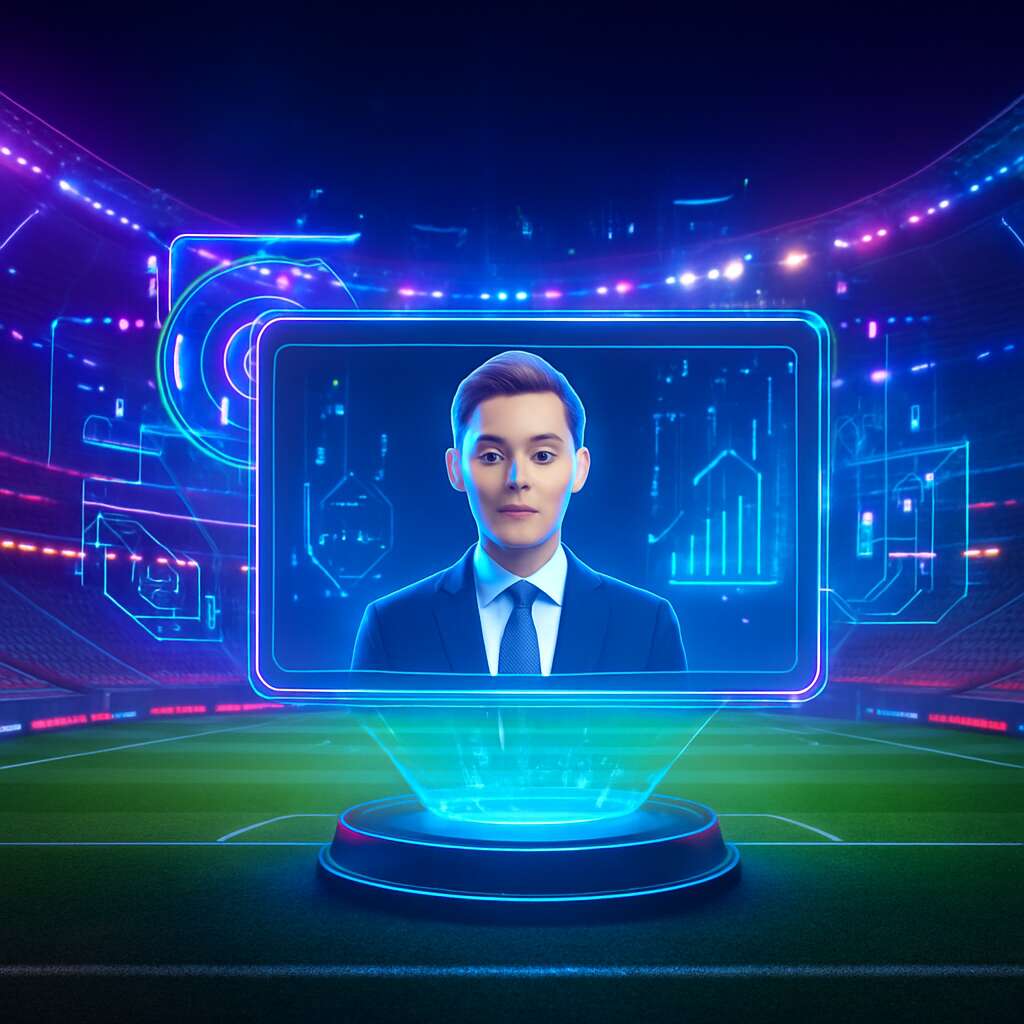
The Evolution of Sports Commentary with AI
Historical Development of Sports Commentators - From traditional to digital advancementsThe evolution of sports commentary reads like a captivating saga, unfolding from whispering in stadiums to the digital roar of AI-Generated Sports Commentators. In the early days, commentators relied on raw talent, spontaneous wit, and a voice that could turn a simple goal into history. Fast forward to today, where the digital age has transformed this art form into a fine-tuned science, thanks to technological marvels.With the advent of digital advancements, traditional broadcasters have paved the way for AI to take center stage. Automated algorithms now mimic the passionate tone of seasoned analysts, offering a seamless experience for viewers. This has led to some hilarious yet oddly compelling plays on words—think AI-mimicked enthusiasm with a dash of robot charm. As AI-Generated Sports Commentators continue to advance, the line between human intuition and machine precision becomes blurrier, promising a future where digital commentary might just rival the best voices in the business.Role of Artificial Intelligence in Broadcasting - AI's integration into sports mediaThe role of Artificial Intelligence in sports broadcasting has rapidly evolved, transforming the way we experience live events. AI-Generated Sports Commentators now enrich coverage with a blend of precision and personality, often mimicking the enthusiasm of seasoned sports analysts. This innovation allows broadcasters to deliver continuous commentary without fatigue, ensuring a fresh, engaging experience for viewers.
What makes AI-Generated Sports Commentators truly remarkable is their ability to analyze extensive data instantly, providing real-time insights that even human commentators might take seconds to process. This integration has brought about a new era of immersive sports media, where machines blend factual accuracy with captivating narration.
A few ways AI is redefining sports commentary include:
- Generating dynamic, contextually relevant commentary
- Adapting tone and style based on game intensities
- Expanding coverage across multiple languages seamlessly
As these systems become more sophisticated, the line between human intuition and machine precision continues to blur, promising a future where AI-Generated Sports Commentators will be a defining feature of modern sports broadcasting.Milestones in AI Sports Commentary Technology - Key innovations and breakthroughsThe evolution of sports commentary has taken an unexpected yet fascinating twist thanks to breakthroughs in AI-Generated Sports Commentators technology. What once relied solely on human wit and instinct is now augmented—and in some cases replaced—by sophisticated algorithms that can rival seasoned analysts in seconds flat. One milestone was the advent of machine learning models capable of analyzing live data streams with stunning speed, transforming how commentary is delivered during high-octane moments on the pitch.
The earliest breakthroughs involved integrating natural language processing with real-time data analysis, enabling machine-generated insights that sound surprisingly human. Over time, innovations like sentiment-adaptive narration emerged, allowing AI-Generated Sports Commentators to shift tone dynamically—be it tense, celebratory or contemplative—matching the game's energy.
A typical breakthrough included the development of multilingual AI systems, breaking down language barriers and making sports commentary accessible worldwide. It’s no exaggeration to say that these technological milestones are reshaping how fans experience their favourite matches, creating a new era where AI and human commentary coexist in a harmonious, if slightly uncanny, dance.Challenges in Transitioning to AI Commentary - Technical and ethical considerations
As AI technology advances, the transition from human to AI-Generated Sports Commentators presents a fascinating mix of technical innovation and ethical questions. The challenge lies in creating commentary that captures the excitement and nuance of live sports, while maintaining transparency about AI's role. Many broadcasters worry about losing the authentic voice of seasoned analysts, yet the push for efficiency and consistency drives development forward.
One significant hurdle is ensuring these AI systems respect ethical standards — avoiding bias, offensive language, or misrepresentation. Developing algorithms that can interpret complex game situations while adapting tone dynamically is no small feat. Fans crave engaging commentary, but balancing AI's analytical precision with human warmth requires sophisticated natural language processing capabilities.
- Technical considerations include real-time data integration, multilingual capabilities, and sentiment-adaptive narration.
- Ethical considerations focus on transparency, bias mitigation, and audience trust.
As these challenges are addressed, AI-Generated Sports Commentators will become an integral part of future broadcasts — offering expert insights at lightning speed, with ongoing debates about authenticity and ethics adding extra layers to this evolving landscape.
How AI-Generated Sports Commentators Work
Underlying Technologies and Algorithms - Machine learning, natural language processing, neural networksBehind the captivating voice of AI-Generated Sports Commentators lies a sophisticated web of underlying technologies and algorithms. At the heart of this innovation is machine learning, which enables these systems to analyze vast streams of data and adapt their commentary style based on real-time game scenarios. Instead of rigid scripts, they generate dynamic narratives that mirror human intuition and spontaneity.
Natural language processing (NLP) plays a pivotal role, allowing AI-Generated Sports Commentators to understand and produce coherent, engaging speech. It interprets complex sports jargon, contextual cues, and player actions, transforming raw data into articulate commentary. Neural networks, especially deep learning models, facilitate pattern recognition—identifying player movements, game momentum, and crucial moments with remarkable accuracy.
- Data ingestion from multiple sensors and feeds
- Pattern recognition through neural network algorithms
- Real-time language generation using advanced natural language processing
This synergy ensures AI-Generated Sports Commentators can seamlessly mimic the nuances of human commentary, contributing to an immersive viewing experience that increasingly feels both authentic and technologically awe-inspiring.
Data Collection and Training Processes - Gathering game data, training models, refining accuracyBehind every seamless AI-Generated Sports Commentators experience lies a meticulous data collection process that fuels their precision. Collecting game data isn't just about recording scores and player stats; it involves ingesting real-time feeds from multiple sensors, cameras, and tracking systems. This tapestry of information paints a vivid picture of the game’s pulse, momentum shifts, and player dynamics. The raw data feeds into sophisticated training models, which learn to recognize patterns and contextual cues that mimic human intuition.
During the training process, these models are refined through iterative processes that improve their understanding of game sequences and commentary relevance. They sift through countless hours of historical game footage and live feeds, constantly honing their ability to identify crucial moments. To enhance accuracy, developers implement techniques such as supervised learning and reinforcement learning—tools that help the AI-Generated Sports Commentators become more adept at delivering authentic, engaging narration. The end goal? Human-like commentary that evolves with each game and remains deeply connected to what viewers truly want to hear.
Real-time Commentary Generation - Live data analysis, instant speech synthesisWhen the roar of the crowd fades into digital echoes, AI-Generated Sports Commentators spring to life, weaving live narratives with uncanny precision. At their core lies a symphony of real-time data analysis—an intricate dance where every sensor feed and tracking system contributes to an adrenaline-charged story unfolding on the screen. These systems parse through streams of dynamic game data instantly, transforming raw numbers into meaningful insights that guide the narration.
Using clients like neural networks and natural language processing, AI-Generated Sports Commentators interpret key moments, from lightning-fast plays to subtle player movements. They employ refined algorithms that recognize patterns—be it a sudden momentum shift or a tactical switch—highlighting the game's pulse. The process resembles a meticulous conductor, orchestrating data into vocal cues that resonate authentically with viewers.
- Real-time data from sensors paints a vivid picture of the game’s flow.
- Instant speech synthesis converts this analysis into engaging commentary on the fly.
This seamless blend of analytical prowess and linguistic finesse ensures that AI-Generated Sports Commentators bring a human-like warmth and immediacy to live broadcasts, capturing the thrill of the moment in a language that feels both familiar and innovative.
Customization and Personalization Features - Attuning commentary to audience preferencesImagine a game where every play, every subtle move, is transformed into captivating commentary tailored precisely to viewers’ preferences. AI-Generated Sports Commentators possess a remarkable capacity for customization and personalization, rendering each broadcast uniquely attuned to the audience's tastes. Through sophisticated algorithms, these systems analyse viewer behavior, historical engagement, and even regional sensitivities to craft commentary that resonates on a personal level.
Rather than a one-size-fits-all approach, AI-Generated Sports Commentators can adapt their tone, pace, and focus based on audience profiles. For instance, some viewers may prefer analytical insights while others enjoy a more enthusiastic tone that heightens the thrill of a live moment. To facilitate this, systems employ nuanced settings that allow broadcasters to fine-tune parameters, ensuring the commentary aligns with viewer expectations. This personalized interaction transforms live sports broadcasting into an immersive experience, elevating the connection between fans and the game.
Advantages and Challenges of AI-Generated Commentators
Benefits for Broadcasters and Fans - Cost-efficiency, consistent quality, 24/7 availabilityThe spectacle of live sports broadcasting is undergoing a silent revolution. AI-Generated Sports Commentators are changing the game, a phenomenon that continues to captivate the industry. Their ability to deliver consistent quality in real-time defies the limits of human stamina, making them invaluable for broadcasters seeking an uninterrupted flow of commentary. Unlike traditional commentators, AI-generated voices can operate around the clock, offering 24/7 coverage without fatigue or bias.For fans, this means an immersive viewing experience that is both seamless and personalized. Customization features enable audiences to tailor commentary styles and language, increasing engagement and satisfaction. Broadcast companies find particular advantage in the cost-efficiency of AI-generated commentators. By reducing the need for large teams of commentators, costs shrink substantially yet keep the commentary lively and accurate. Here are some benefits that highlight the impact of AI-Generated Sports Commentators:
- Continuous, round-the-clock coverage
- Cost-effective deployment compared to human commentators
- Consistent quality and accuracy during live events
- Enhanced audience engagement through personalized commentary options
- Quick adaptation to different sports and varying audience preferences
Nevertheless, integrating AI-generated voices into live sports broadcast still faces hurdles. Technical challenges such as ensuring contextual understanding and emotional nuance remain prominent. Ethical concerns hovering over authenticity and viewer trust also demand attention, but the technological strides in natural language processing and neural networks are steadily paving the way. As AI-generated sports commentary matures, it promises to redefine not only how games are covered but also how fans experience the thrill of sport itself.Limitations and Ethical Concerns - Authenticity, emotional connection, bias mitigation
As the arena of sports broadcasting evolves, the debate surrounding AI-Generated Sports Commentators intensifies. While their advantages in delivering continuous, accurate commentary are evident, the limitations and ethical considerations pose a compelling challenge. Authenticity remains elusive for these virtual voices. Can AI truly replicate the emotional connection that human commentators forge with passionate fans? This question lingers as technology strives to enhance natural language processing and neural networks to mimic human nuance.
Bias mitigation also warrants attention. AI systems are only as good as the data they are trained on, which can inadvertently perpetuate stereotypes or favoritism if not carefully monitored. To address these issues, broadcasters are increasingly adopting - transparent algorithms
- diverse training datasets aimed at fostering fairness and authenticity.
While AI-Generated Sports Commentators offer game-changing benefits like around-the-clock coverage and cost efficiency, they still face significant hurdles. The challenge lies in enhancing contextual understanding—interpreting game subtleties and emotional cues that add richness to commentary. As these systems become more sophisticated, the question remains: can they genuinely forge the emotional bonds that make live sports commentary so compelling? The journey toward an authentic voice in AI-generated sports narration is ongoing, and the stakes have never been higher.
Impact on Employment in Sports Media - Job displacement versus new opportunitiesThe advent of AI-Generated Sports Commentators has sparked a heated debate across the sports media landscape. While these virtual voices offer remarkable opportunities—such as around-the-clock coverage and consistency—they also bring about complex challenges, particularly in employment dynamics within the industry. Many worry about job displacement, fearing that traditional commentators might be edged out as AI systems become more sophisticated.
Yet, the rise of AI-Generated Sports Commentators doesn’t spell the end for human expertise. Instead, it opens avenues for new roles—those involving the fine-tuning of algorithms, data analysis, and audience engagement. For broadcasters, integrating AI doesn't mean replacing all human voices; it often involves creating hybrid models that combine automation with personalized, human touchpoints.
- Training and refining AI models require skilled workers who are well-versed in sports analytics and machine learning.
- There’s also an increasing demand for content strategists to craft behind-the-scenes narratives that resonate on a human level.
- Casual fans crave authentic storytelling, adding a layer of nuance that AI is still learning to grasp.
In the end, the evolution of AI-generated sports commentary transforms the industry from mere replacement to partnership—blurring lines between technology and tradition. It’s undoubtedly reshaping employment, creating roles that didn't previously exist, transforming the way fans experience the game, and impacting the future landscape of sports broadcasting in profound ways.
Future Potential for AI in Sports Commentary - Innovative interaction, immersive experiencesIn the shadowy corridors of innovation, AI-Generated Sports Commentators cast an uncanny glow—illuminating a future fraught with both promise and peril. Their capacity to orchestrate immersive experiences transforms the way fans indulge in the game, blurring the line between human prowess and artificial mastery. The potential for innovative interaction—the kind that breathes life into static broadcasts—offers a dark allure: the sensation of standing at the precipice of a new epoch in sports commentary.Yet, with this bright promise come formidable challenges. One such obstacle is the limitation of authentic storytelling; AI still lags in capturing the emotional subtleties that human commentaries convey. The future of AI in sports commentary hinges on multi-layered collaboration, where the following elements become pivotal:
- Refining natural language processing to emulate human nuance
- Tailoring customization features to specific fan demographics
- Addressing ethical concerns about bias and authenticity
- Enhancing algorithms through ongoing data collection and training
The specter of machine learning and neural networks promises a dizzying array of possibilities—such as creating content that evolves with each game, personalising narratives to resonate on a visceral level. As this hauntingly beautiful symphony of technology and tradition gains momentum, the future of AI-Generated Sports Commentators becomes a landscape marked by both revolution and reverence—an eerie dance between the known and the unknown.
Future Trends and Innovations in AI Sports Commentary
Emerging Technologies and Integrations - Augmented reality, virtual assistantsArtificial intelligence is poised to revolutionise sports commentary with emerging technologies that blur the lines between reality and immersion. Future trends in AI-generated sports commentators are not just about flawless narration; they're about creating personalized, immersive experiences that captivate fans like never before. Advancements such as augmented reality (AR) are set to transform the viewing experience by overlaying real-time data and vivid visuals directly onto live feeds, making each game feel more visceral and interactive.
Simultaneously, virtual assistants powered by AI are evolving into intelligent commentating partners. These virtual systems can adapt commentary styles to match viewer preferences or specific sports scenarios, providing a tailor-made experience that engages audiences on a deeper level. As these innovations develop, expect to see AI-generated sports commentators seamlessly integrate into mixed-reality environments, setting new standards for fan engagement.
- Enhanced visualizations through AR for more immersive game coverage
- AI-driven virtual assistants offering personalised commentary styles
- Cloud-based processes enabling real-time data analysis and speech synthesis
Personalized Viewing Experiences - Audience data-driven customization
As technological frontiers expand, one of the most captivating trajectories is the evolution of AI-Generated Sports Commentators—transforming how fans experience live events. Driven by sophisticated algorithms and deep learning, these commentaries are moving beyond simple narration to deliver highly personalized viewing encounters. Imagine a future where every fan’s viewing preferences shape the commentary style, creating an intimacy reminiscent of a personal interaction rather than a broadcast. Such tailored experiences deepen emotional engagement and foster a stronger connection to the sport.
Emerging trends harness augmented reality to overlay real-time statistics, vivid visuals, and interactive graphics directly onto live feeds. This approach transforms passive viewers into active participants, making each game feel more visceral.
https://pixel-earth.com/ai-generated-sports-commentators-redefining-live-coverage-with-automated-voiceovers/


Comments
Post a Comment